


PFAS and Your Drinking Water
PFAS, or per- and polyfluoroalkyl substances, are a group of thousands of manufactured chemicals that have been widely used in industrial and consumer products since the 1940s. They are found in everyday items such as nonstick cookware, waterproof clothing, stain-resistant fabrics and carpets, and food packaging as well as firefighting foam and a range of industrial applications.
Because of their widespread use and persistence, PFAS are now commonly detected in the environment. They can migrate through soil into groundwater or be carried by runoff into streams and rivers, potentially affecting drinking water sources.
At Veolia, your drinking water is our top priority. We extensively test our water for PFAS, install advanced treatment systems where needed and develop innovative solutions to meet this challenge. We are committed to meeting all state and federal regulations.
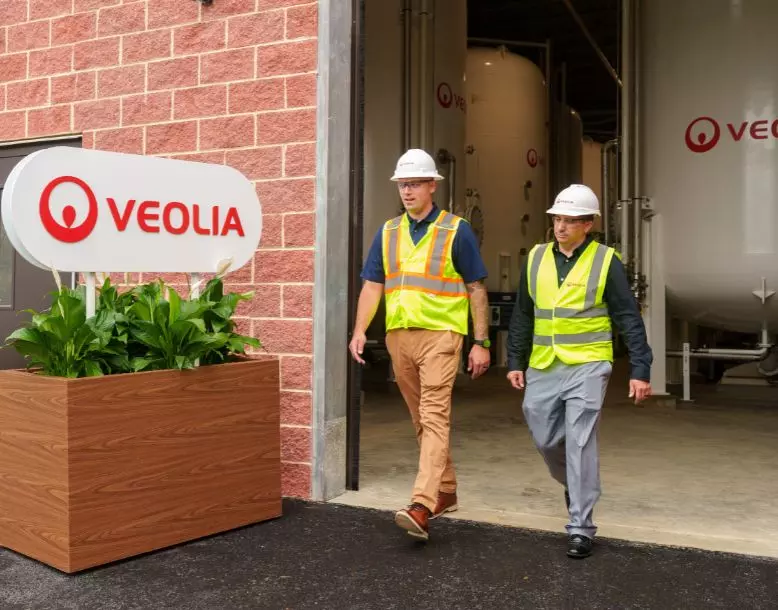
Veolia’s Commitment
Veolia has been leading the way on PFAS.
We have treated more than 7 billion gallons of water for PFAS. Across the United States, over 30 PFAS treatment systems are already in operation, with more than 70 others under development in four states.
Here's what we're doing in your region:
Delaware
Our state-of-the-art PFAS treatment facility in Stanton began operation in 2025. Serving more than 100,000 residents, it is one of the largest PFAS treatment facilities in the nation.
New York
Our Lake Deforest PFAS treatment plant is under construction and will treat 20 million gallons daily when it opens in early 2027.
Rhode Island
PFAS levels are closely monitored and to date remain below the EPA PFAS drinking water limits as discussed in greater detail below.
New Jersey
We're leading PFAS treatment with multiple advanced systems in operation statewide, from the Highlands to Franklin Lakes. In Allendale, we acquired the municipal system and installed advanced treatment, bringing Veolia’s expertise to help ensure the community’s water supply meets all state and federal regulations.
Pennsylvania
We've found smart, cost-effective solutions — like combining treatment at our Bunn and Snyder wells and avoiding contaminated water sources — that protect your water while keeping costs down.
Idaho
Multiple PFAS projects are currently under development including wellhead treatment, where needed, and unique approaches like redrilling of wells into aquifers not impacted by PFAS.
At Veolia, we take our responsibility to meet PFAS regulations seriously and are working proactively to maintain compliance with all federal and state requirements.
Our teams closely monitor evolving regulations, partner with state and federal regulators and invest in advanced testing and treatment solutions so we can continue providing drinking water to the communities we serve that meet state and federal regulations.
Frequently Asked Questions
Understanding EPA PFAS regulations
The U.S. Environmental Protection Agency (EPA) finalized the first-ever national drinking water standards for PFAS on April 10, 2024. The federal regulation establishes enforceable Maximum Contaminant Levels (MCLs) for six PFAS compounds in drinking water systems.
The rule sets individual MCLs of 4 parts per trillion (ppt) for PFOA and PFOS, and establishes limits for three additional PFAS: PFNA (10 ppt), PFHxS (10 ppt), and HFPO-DA (GenX Chemicals) (10 ppt) chemicals. In addition, the EPA uses a PFAS Hazard Index which is a regulatory tool that calculates the combined risk of a mixture of specific PFAS compounds (PFHxS, PFNA, PFBS, and HFPO-DA (GenX Chemicals)) by summing their individual fractions, determining that a total value greater than 1 exceeds safe drinking water levels. Under the federal regulation, public water systems must:
- Begin initial monitoring for the regulated PFAS compounds by 2027, followed by ongoing compliance monitoring
- Notify customers if PFAS levels exceed the MCLs or hazard index thresholds
- Install treatment or take other corrective actions to meet the standards by April 2029*
*The Trump administration has indicated it may revisit PFAS regulations, which could result in changes to compliance deadlines and scope.
In addition to federal regulations, certain states — including New York, New Jersey and Pennsylvania — have established their own enforceable PFAS standards and timelines.
Where can I find PFAS test results for my water system?
PFAS testing results for your water system are included in Veolia’s annual Consumer Confidence Reports, available at mywater.veolia.us. You can locate your specific report by entering your zip code. Please note that if PFAS were not detected in your water system, they will not appear in the report.

Protecting Water Quality and Customer Affordability
Veolia works closely with federal and state regulators to stay ahead of evolving PFAS standards. Achieving compliance requires significant capital investment in advanced treatment technologies customized to each site's specific needs. Meeting these obligations while keeping water affordable for customers is one of our most important challenges.
We are rigorously evaluating every investment to ensure we select the most effective and efficient solutions for each location. This means conducting thorough engineering assessments, comparing treatment options and designing systems that deliver compliance while reducing costs. We maintain our commitment to providing high-quality water while minimizing the impact on customer rates.
Examples of this approach include consolidating treatment at sites like the Bunn and Snyder wells in Pennsylvania and redrilling wells to avoid PFAS-containing aquifers. These alternative approaches have been implemented for a fraction of the cost of permanent treatment installation.
Given the magnitude of these investments, ensuring fair cost distribution is essential. Water companies did not create PFAS contamination, but we are responsible for removing it from our water supply sources. We are actively pursuing cost recovery from polluters to help protect customers from bearing the full financial burden of remediation.
We support sound governmental policies that ensure compliance by all water utilities – private and public – while protecting customers and communities from these costs. Holding all utilities to the same standards is essential to ensure equitable protection across communities.
We are committed to sharing Veolia’s know-how:
Local Expertise
Specialized PFAS teams in your community, backed by Veolia's national and global resources
Proven Solutions
The most effective treatment technologies — including ion exchange, activated carbon and emerging innovations — tailored to each system
Technical Excellence
Water quality experts who track regulations and best practices to ensure your water meets regulatory standards
Project Management
Experienced leaders ensuring successful, on-time delivery of PFAS projects
Cost Efficiency
Smart designs and strategic procurement to keep costs competitive while maintaining quality
Additional Questions:
Treating for PFAS is exceptionally challenging because the EPA standard of 4 parts per trillion (ppt) represents an extremely low concentration—equivalent to just four drops in 20 Olympic-sized swimming pools. In addition, PFAS chemicals have strong chemical bonds that make them incredibly difficult to remove from water. Conventional treatment methods don't work against PFAS, thus, Veolia has to invest in specialized technologies to protect your water supply.
Our existing treatment systems currently use either Granular Activated Carbon (GAC) or Anion Exchange Resins (AIX), with each system customized based on site-specific water quality conditions. Both methods are proven to reduce PFAS levels and have been designated by the U.S. EPA as the best available treatments for these contaminants.
- Granular Activated Carbon (GAC): Uses a filter made of carbon to trap PFAS and other contaminants as water passes through.
- Anion Exchange Resin (AIX): Uses a specialized material that attracts and removes PFAS from water through a chemical exchange process.
We are also actively researching and testing additional technologies and treatment media to ensure we are using the most effective and efficient treatment solutions available, including but not limited to novel media and technologies such as reverse osmosis and foam fractionation.
PFAS can enter drinking water sources through multiple pathways. Common sources include manufacturing facilities, firefighting foam used at airports and military bases, and runoff from landfills or sites where PFAS-containing products were intentionally or unintentionally released into the environment. Because PFAS do not break down naturally, they persist in the environment and can travel through soil and groundwater, eventually reaching rivers, lakes and wells that supply drinking water.
Bottled water is regulated by the FDA, not the EPA and is often not tested for PFAS. The EPA does not recommend switching to bottled water solely because PFAS has been found in tap water.
Some customers may make the personal choice to use water filters. Please be aware that not all home water filters remove PFAS effectively. Higher‑performance systems like reverse osmosis or certified filters are generally more effective than simple pitcher or faucet filters.
For more information, visit NSF International at nsf.org to look for products certified to NSF/ANSI Standard 53 or 58 for PFAS reduction. Please be advised that Veolia is not responsible for any customer additions to internal plumbing.
Follow the advice of your water utility regarding using water for drinking, cooking, bathing, dish washing, providing to pets or filtering during the advisory. Don't boil your water. Boiling water will not reduce PFAS exposure risk.
Where can I find more information about PFAS?
What else can I do if I'm still concerned about PFAS?
Reach out to your state and Federal elected officials to voice your concerns about PFAS contamination. Urge them to hold PFAS manufacturers and other responsible parties accountable for polluting watersheds and groundwater wells with PFAS.
Disclaimer:
The information contained herein is based on the Veolia group's understanding and know-how of the scientific, regulatory and technical fields discussed herein as of the time of publication. No contractual undertaking or offer is made on the basis hereof and no representation or warranty is given as to the accuracy, completeness or suitability for the purpose of the relevant information.